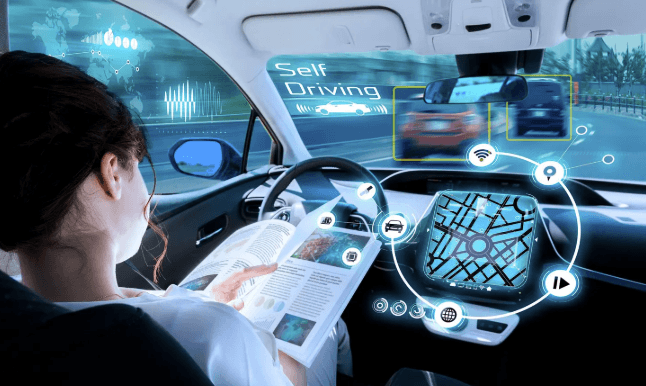
The future of self-driving cars hinges on integrating sensor fusion, perception, and decision-making into reliable, scalable systems. software refinements will push reliability and safety, while richer sensor suites and standardized interfaces ease deployment across varied environments. Cities will reshape mobility networks, pricing, and zoning to curb congestion and improve access. Safety, ethics, and regulation will shape governance and liability. As interfaces become more intuitive and architectures more resilient, the path forward invites scrutiny and closer examination of trade-offs.
What Self-Driving Cars Do and How They Work
Self-driving cars integrate a suite of sensors, software, and control systems to perceive the environment, reason about the vehicle’s state, and execute driving maneuvers.
They rely on sensor fusion to synthesize data from cameras, LiDAR, and radar, forming reliable situational awareness.
Autonomous ethics guides decision frameworks, while algorithms translate perception into safe, efficient trajectory planning and disciplined, autonomous control.
Freedom-enabled mobility advances.
Real-World Upgrades on the Horizon for 2025–2028
Real-world upgrades slated for 2025–2028 center on expanding reliability, safety, and scalability through incremental software refinements, richer sensor integration, and standardized interfaces.
The trajectory emphasizes robust validation cycles, fail-safe decision trees, and modular telemetry for over-the-air updates.
Future automation gains hinge on unified data models, while Road ergonomics guides interface design, ensuring intuitive, autonomous operation across diverse environments without compromising freedom.
Impacts on Cities, Jobs, and Everyday Life
Urban mobility is poised to shift as autonomous systems integrate with existing transportation networks, reshaping city planning, labor markets, and daily routines.
The analysis examines how automated fleets alter urban planning incentives, land use, and zoning, while potential road pricing mechanisms balance demand, finance infrastructure, and curb congestion.
Jobs evolve toward service and maintenance, with efficiency gains guiding policy toward adaptive, freedom-friendly urban ecosystems.
Navigating Safety, Ethics, and Regulation
How will safety, ethics, and regulation converge as autonomous vehicles scale from pilot programs to widespread deployment? The topic analyzes layered governance, algorithm transparency, and liability frameworks. It surveys privacy concerns and accident accountability, balancing innovation with public trust. Technical standards, insurance incentives, and breach remedies shape deployment while preserving user autonomy, industry resilience, and accountable oversight.
Frequently Asked Questions
How Will Self-Driving Cars Handle Extreme Weather and Natural Disasters?
Extreme weather triggers robust redundancy: atmosphere sensors detect anomalies, onboard failsafes re-route routes, and fleet coordination optimizes resilience. Operator transparency remains paramount as algorithms adapt in real time, ensuring safety margins while preserving user autonomy and freedom of movement.
What Are the Long-Term Environmental Impacts Beyond Emissions?
Thunder murmurs, revealing a caution: long-term environmental impacts beyond emissions involve resource use and land shifts. The analysis notes urban noise reductions, but higher energy density demands, influencing grid demand, materials supply, and ecosystem interfaces within a freedom-seeking, tech-savvy society.
When Will Ownership Models Shift From Car Ownership to Mobility-As-A-Service?
Autonomous ownership shifts gradually; by the late 2020s to early 2030s, Mobility-as-a-Service dominates urban ecosystems. Analysts expect principal drivers: reduced ownership costs, optimized fleets, autonomous insurance pricing, and streamlined fleet maintenance across diversified service models.
See also: What Are the Main Advantages of Decentralized Systems?
Could Autonomous Fleets Influence Suburban Design and Zoning Laws?
Autonomous fleets may nudge suburban design toward denser, multi-use corridors while challenging zoning laws to accommodate curbside pickups and delivery hubs; the analysis suggests adaptive planning, modular roadway interfaces, and flexible parking policies supporting freedom through mobility.
How Will Liability Work in Multi-Car, Mixed-Traffic Scenarios?
Liability assignment in mixed-traffic multi-car systems hinges on fault sharing protocols, which allocate responsibility across drivers, manufacturers, and operators; simulations indicate tiered fault fractions adjust with scenario risk, sensor redundancy, and data provenance, enabling precise accountability without collective scapegoats.
Conclusion
The trajectory of autonomous driving, like a distant meteor, hints at steady, measurable impact rather than abrupt upheaval. As sensor fusion and decision systems mature, cities will reallocate space and pricing to optimize flow, while safety and ethics frameworks render liability clearer and more enforceable. This convergence—the neural, the infrastructural, the normative—suggests a future where autonomy, trust, and transparency coexist, guiding deployment with disciplined mileage rather than dramatic leaps.